
Biscuit
Production Lines
Complete turnkey lines for biscuit, cookie and cracker production, covering ingredient handling, dough forming and baking through to stacking and packing.
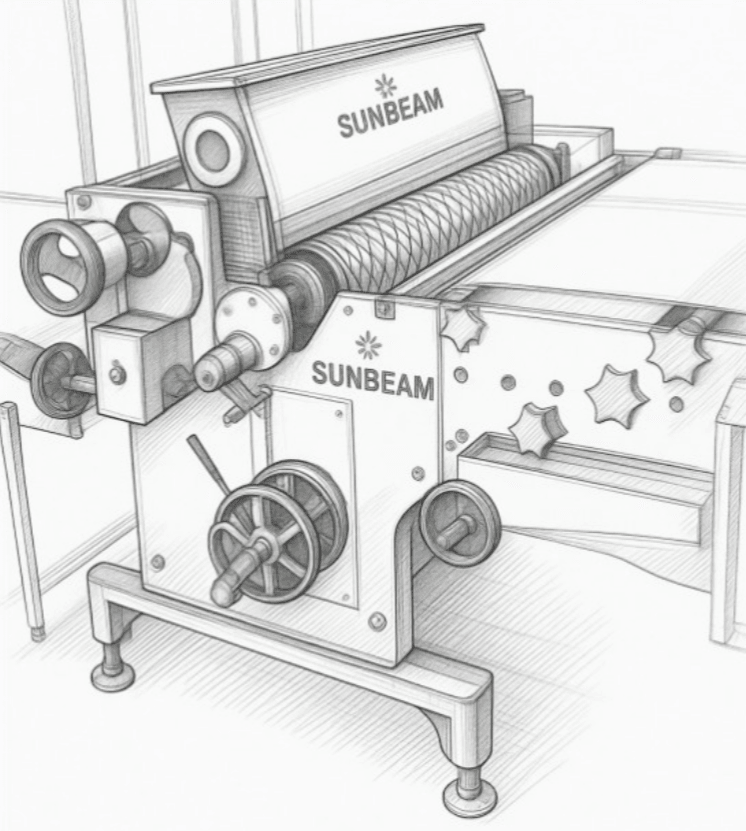
Crackers and Hard Sweet Biscuits Hold Their Shape
Crackers and hard sweet biscuits hold their shape only when the dough is worked in stages. Our lines sheet, laminate and cut in sequence, so the piece that leaves the cutter is the piece that reaches your carton.
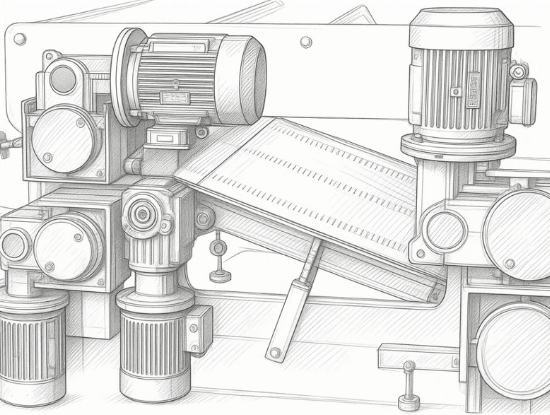
Rich Dough Puts the Giveaway in the Forming Section
Rich dough gives up its shape easily, which puts your giveaway in the hands of the forming section. Our moulding holds weight and surface detail steady from the first tray of a shift to the last.
One Line. Both Dough Families. Fifteen Minutes Between Them.
Plants that make crackers and cookies have carried two lines, or given up a shift to every rebuild. The flexi line holds both forming arrangements in registration, so switching product family takes roughly fifteen minutes.
We commissioned our first flexi-line forming section in 1997. Everything since has refined the same idea.
- One line and one footprint covering two product families
- Changeover hours returned to saleable output
- Short runs of a second product worth scheduling
- One spares inventory and one maintenance routine
Hard Dough Line Engineering
Highly accurate sheet thickness and clean rotary cutting for flawless crackers.
Lamination to Eight Layers
Lamination configured per product builds the structure your cracker is judged on, laid as a continuous sheet and folded on itself.
Staged Gauge Reduction
Servo gap adjustment holds the cut dimension through to the oven, which protects pack fit and piece count.
Dual Roller Cutting
Dockers, prints and cuts in one pass, and automated scrap return recovers material on every metre of the line.
Soft Dough Line Stages
An integrated line managing the complete manufacturing cycle from raw mixing to packaging.
Jacketed Dual-Speed Mixing
Holds your dough at working temperature through the batch, which keeps piece weight steady at the moulder.
Chainless Moulder
Independent drives let an operator correct weight or release in minutes, and hold embossing and docker detail through the run.
Multi-Zone Tunnel Oven
Develops surface colour while the body stays tender, with insulation that holds fuel cost per tonne.
Super Hygiene Construction
Paint-free stainless surfaces, track-free belts and open access shorten sanitation downtime and keep an audit routine. Layouts are drawn for low product contact, aligned to GMP and HACCP expectations.
Integrated Control
PLC control with touch screen HMI holds recipe memory across the line, which shortens changeover and reduces the load on your operators. Data logging supports maintenance planned ahead of wear.
Installed, Commissioned, Handed Over Running
We install your line, commission it on your own formulation, and train your operators before handover. Standardised parts held ex-stock simplify spares selection and shorten downtime.
Speak to an EngineerTechnical Specifications
Machine drawings and full specification sheets are issued with a quotation.
Hard Dough Lines
| Parameter | Specification |
|---|---|
| Working Width | 800 mm to 1,525 mm |
| Sheet Thickness Range | 0.2 mm to 15 mm, adjustable via PLC |
| Laminating Layers | Up to 8 |
| Cutting | Single or double head rotary |
| Gauging | Multi-stage, servo gap adjustment as standard |
| Scrap Return | Automated recycle loop |
| Oven Type | Direct fired, indirect fired, convection or hybrid, to 100 m |
| Baking Temperature | Up to 350°C, multi-zone independent control |
| Control System | PLC and VFD with touch screen HMI and recipe memory |
| Construction | Paint-free stainless steel, food grade contact parts |
| Layout | Customizable: straight line or L shape |
Soft Dough Lines
| Parameter | Specification |
|---|---|
| Production Capacity | 250 kg/hr to 2,500 kg/hr |
| Working Width | 800 mm to 1,525 mm |
| Moulder | Chainless, independent drives, up to 1,525 mm |
| Oven Type | Direct or indirect fired tunnel, to 100 m |
| Baking Temperature | Up to 350°C, multi-zone independent control |
| Power Source | Natural gas, LPG, diesel or electricity |
| Control System | PLC and VFD with touch screen HMI and recipe memory |
| Construction | Paint-free stainless steel, food grade contact parts |
| Layout | Customizable: straight line or L shape |
Frequently Asked Questions
What machines make up a biscuit production line?
Mixing and dough feeding, a forming section, a tunnel oven, cooling conveyors, and stacking with packing integration. The forming section differs by product: a rotary moulder for soft dough, or sheeters, laminators, gauging stations and a rotary cutter for hard dough.
Can Sunbeam supply individual machines?
Individual units can often be supplied to integrate with an existing line. Share your current line speed, width and control arrangement so we can confirm fit.
What is the widest line Sunbeam builds?
Lines are built to 1,525 mm. A wider line delivers higher output inside the same footprint on broadly unchanged overheads, which is usually the lowest cost route to additional capacity.
Which tunnel oven should my plant choose?
Crackers generally take a direct fired oven. Products sensitive to the combustion atmosphere take indirect radiant. Thicker products bake evenly under convection. Configuration is recommended against product and available fuel.
What is the difference between a rotary moulder and a rotary cutter?
A rotary moulder presses soft dough into a die to form the piece, used for glucose, cream and milk biscuits. A rotary cutter cuts shapes from a laminated hard dough sheet, used for Marie, crackers and savoury biscuits. Dough rheology determines which the line requires.
Why do biscuits shrink or curl after cutting?
Elastic recovery, caused by reducing the sheet faster than the matrix can relax. Staged gauge reduction holds the cut dimension through to the oven.